Sunday, 5 February 2017

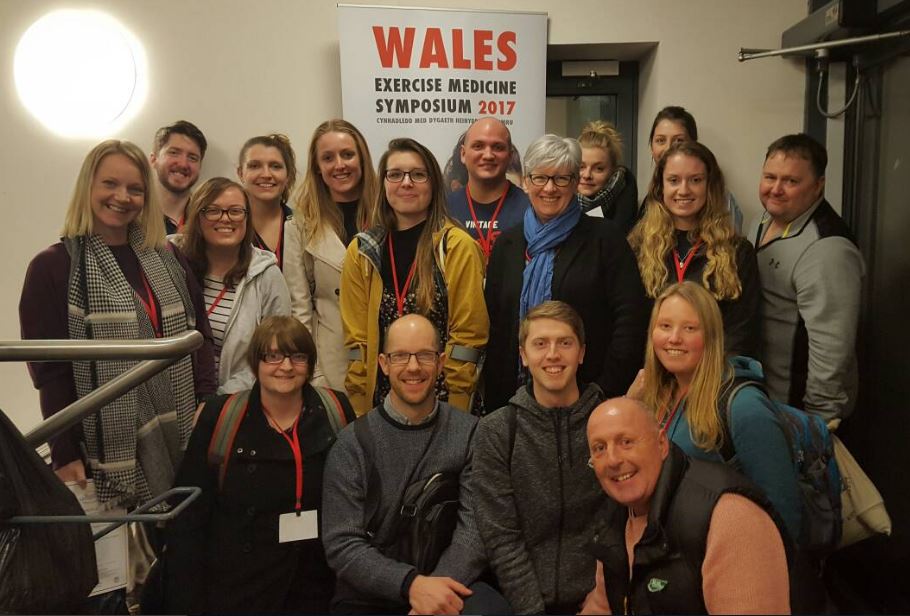
Student trip to #WEMS17, Cardiff

Cardiff trip jan2017.JPG

This was third time that I’ve taken a group of Marjon Uni students to the Welsh Exercise Medicine Symposium in Cardiff. The event is organised by the Cardiff Sports & Exercise Medicine Society and has got better each year we’ve attended (here’s our notes from last year). The event was packed with lectures of a very high quality and on this page we’ve tried to capture some of our notes from the day, some of the papers and resources that were shared by presenters and our own personal reflections on attendance. Our group contained students from all three years of undergraduate study and most were either SPAH students or Sports Therapist/Rehab students. For many it was their first such event and for that reason it was a real pleasure for me to be part of that experience.

Thursday, 5 January 2017

Duchy College Sport Rehabilitation introduction


BTEC students from Duchy College were welcomed to Marjon University for a teaching session on the Principles of Rehabilitation, by the Sports Therapy and Rehabilitation team. 6 students took part in the session, which covered the basic rehabilitation principles, treatments and rehabilitation exercises that could be used within a treatment plan.

The first treatment the students experienced was ICE. After an acute injury, the aim of treatment is to reduce pain, muscle spasm (should it have occurred) and swelling. Ice helps to alleviate these symptoms (Nadler et al., 2004) and when combined with compression further helps the reduction in swelling. Students experienced both the GameReady machine and the Squid machine.

The second treatment modality was the use of Kinesiology Tape (K-tape). K-tape has the potential to alleviate pain (Bassett et al., 2010) and improve healing in soft tissues, by lifting the skin and increasing blood flow. It is a modality that can be used during any stage of rehabilitation. A basic lateral ankle sprain tape was used and the students were able to practice the application on each other and for a first attempt, they all did a very good job! They tested balance on each leg and compared the non-taped to the taped and found there was a difference in balance and how it felt.

Wednesday, 14 September 2016

The Importance of Habit Formation in Changing Behaviour

by Ben Jane

How much control over our actions do we actually have?

We like to think that we’re fully in control of our actions but we don’t have to look too far to see that the model of rational choice making is quite limited. Put a new kitchen in an old house and three months down the line you can still find yourself absent-mindedly reaching for the old cutlery drawer. Get in the car to go somewhere and you might, on occasion, find yourself driving to work rather than your intended destination. These actions are habits, patterns of behaviour that occur automatically when in particular situations and faced with specific cues or triggers. Trying to make sustained lifestyle changes for health reasons can require the disruption of old, unwanted habits and the creation of newer, more desirable routines (Danner et al, 2008, Marteau et al, 2012), the amount of willpower needed, or strength of intention to change might not be quite as important as how well we can create new habits. 

We need to create shortcuts in our thinking just to get by.

A reliance on goals or intentions alone requires a more reasoned, controlled approach to decision making which can be cognitively demanding, difficult to sustain in the long term, and easily disrupted if stressed or having to make many other lifestyle decisions (Baumeister et al, 1998; Verplanken et al, 2006).

Friday, 27 May 2016

Primary Care & Public Health Conference 2016

Primary Care and Public Health Conference 2016 – Therapy
Primary Care and Public Health Conference is the UK’s leading event for GP’s, commissioning groups and all healthcare professionals working in primary care, community, public health, global and prison health. The conference is organised into different areas depending on your profession and interests and staff visited the Therapy programme.
Some interesting topics were on offer and of particular interest were “Achilles Tendinopathy – Advances in Rehabilitation” by Chris Myers and “Innovations in the Management of Tennis Elbow” by Val Jones.
Previous treatments of such conditions have involved the use of eccentric loading, rest and cryotherapy. Current research suggests that there are other modalities that should be considered first when dealing with these conditions, namely isometric contractions. With each condition, Achilles and lateral elbow (namely extensor carpi radialis brevis) tendinopathies, it is also worth knowing there is a difference in size of the muscles in each area  i.e. Achilles tendon can take more load than the wrist extensors. Therefore exercises prescribed should reflect this difference (body weight compared to theraband) and intensity should be greater for the Achilles complex compared to the lateral elbow complex.

Monday, 18 April 2016

Access All Aerials Charity Event

On Saturday 16th April, first and second year Sports Therapy and Rehabilitation in Sport and Exercise Students attended a charity event at Dame Hannah’s, Newton Abbot, in aid of Access All Aerials: http://www.discoverhannahs.org/seale-hayne/support/access-all-aerials/


Access All Aerials is a radio station broadcasting live over the internet with around 30 presenters who have a wide range of disabilities. This radio station has given these individuals confidence and allows them to be heard; "they can see the person and not the disability".


Wednesday, 13 April 2016

Free MOOC - Physical Activity, Exercise and Physiotherapy

We are all aware of the importance of health promotion via physical activity interventions. This Massive Open Online Course (MOOC) is a 6-week course over the summer months aimed towards health care workers and covers topics such as the evidence for physical activity, health benefits and best practice models.

Friday, 8 April 2016

Book Review: Beyond Behaviour Change (edited by Fiona Spotswood)

It’s just a few years since Michie and colleagues attempted to draw links between the wide range of cognitive behaviour change theories that exist in the field of psychology and it seems logical to try and extend these connections beyond the field of psychology. While this book is clearly grounded in the field of sociology it manages to achieve its aim of acknowledging a range of disciplines, offering contradictory viewpoints and considering a variety of influences on behaviour.  The various chapters seek examine the nature of behaviour itself and present their own ideological and theoretical insights into creating meaningful changes across a range of lifestyle "choices".

Mike Kelly and Alan Maryon-Davis have each contributed excellent chapters, writing separately on the political influence and administrative regulation of behaviour change. There is also a chapter that gives a summary of the role of nudge theory and its use in the implementation of government policy by the Behavioural Insight Team’s Michael Hallsworth and Michael Sanders.